Blog
Sep 17, 2026

For many people, starting a family is a long-awaited dream. However, the path to pregnancy is not always straightforward—it can involve unexpected challenges and disappointments. If pregnancy has not begun despite trying, or if there are underlying health concerns, infertility may be a factor. It is not a source of shame or a failure, but a reality faced by a growing number of couples. An estimated one in six couples experiences difficulty conceiving.
Fortunately, modern medicine offers effective ways to help people pursue their dream of having a child. We have had the privilege of supporting the birth of more than 16,000 babies.
Up to 80% of Ovumia’s clients have a child as a result of the right fertility treatments.
A general guideline is:
Couples under the age of 35 are advised to seek fertility care if pregnancy has not begun after one year of trying.
For those aged 35 or over, the recommended timeframe is six months.
This timeframe reflects the fact that conception may take time even when both partners are healthy. If pregnancy has not occurred, it is worth pausing to investigate the situation more closely.
Every situation is individual. If you or your partner has a known condition that may affect fertility, such as endometriosis, PMOS or poor semen quality, we recommend contacting us without delay rather than waiting.
At your first appointment, we begin with a thorough initial assessment aimed at identifying the possible causes of infertility. The process starts with a detailed medical history questionnaire covering your current circumstances, health and any previous treatments.
Basic fertility examinations for women may include:
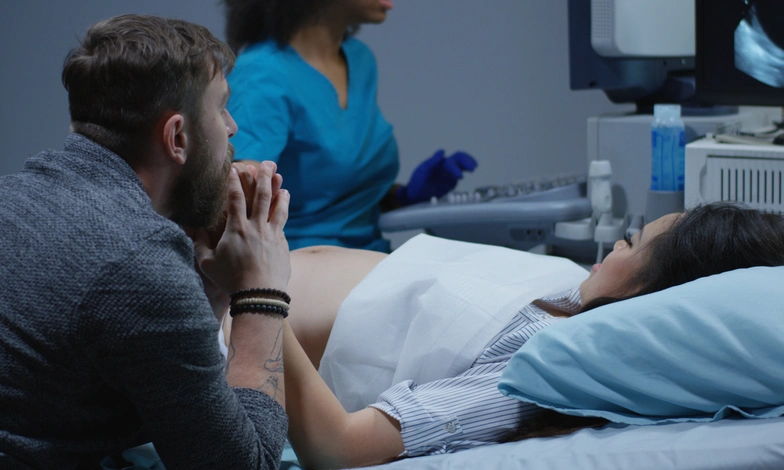
An ultrasound examination to assess the ovaries and uterus
Hormone measurements and laboratory tests to determine whether ovulation is occurring and whether hormone levels are within the normal range
A fallopian tube patency test (HSSG)
Examinations of the uterus, such as hysteroscopy or laparoscopy, if structural abnormalities are suspected
Key fertility examinations for men include:
A semen analysis to assess sperm count, motility and quality. In some cases, a sperm DNA fragmentation test is also performed.
Hormone blood tests, including measurement of testosterone levels
A clinical examination to detect conditions such as varicocele, or dilated veins in the scrotum. If semen quality is particularly poor, an ultrasound examination of the testes is often performed to rule out testicular tumours.
Based on the results of the initial examinations, the doctor may recommend further tests and next steps. Your first appointment is a safe and unhurried consultation where information is gathered and an individual treatment plan is prepared.
It is entirely understandable that infertility can feel frustrating and cause concern. It is reassuring to remember, however, that many fertility problems can be treated. At Ovumia, up to 80% of clients have a child as a result of the right treatment.
Seeking fertility care early may significantly improve the chances of pregnancy. Our experienced team will support you in investigating your situation and finding the solution that is right for you.
At Ovumia, you will be cared for by experienced fertility specialists and have access to the latest fertility treatment methods. If you are wondering whether now might be the right time to seek help, we are here for you.
Book your first appointment and take the first step towards the family you hope for—welcome to Ovumia!